Quick answer
Far more often than on planning applications generally. Of the 2,383 planning conditions we hold in extracted form on cooling and heat-pump applications in the United Kingdom, 322 carry a noise topic (13.5%), against 2,763 of the 155,641 (1.8%) conditions across all planning applications in the same corpus, roughly 7.6 times as often. A noise condition is a requirement attached to an approval, not a refusal.
How often noise conditions appear on cooling applications
Of the 2,383 planning conditions we hold in extracted form on cooling and heat-pump applications in the United Kingdom, 322 carry a noise topic (13.5%). Across every planning application in the same corpus, 2,763 of the 155,641 (1.8%) extracted conditions do. Measured on 2,383 cooling-side conditions against 155,641 overall, a condition attached to a cooling or heat-pump application is roughly 7.6 times as likely to be about noise as a condition attached to a planning application in general.
Those 2,383 conditions were extracted from 558 applications, 456 of them in England, and 237 of the 558 carry at least one noise condition. That second number matters: it means the finding is not a handful of verbose decision notices inflating a count, because the topic is spread across the applications rather than concentrated in a few of them.
A condition can carry more than one topic. A single condition requiring an acoustic enclosure in a specified finish is counted under noise and under materials, so the topic counts across the slice add up to more than the 2,383 conditions they describe, and no topic's share is the complement of any other's.
The reason nobody else publishes this is not that the number is hard to compute. It is that the number requires the officer's reasoning, and the reasoning sits in the decision documents rather than in the planning registers everyone indexes.
Noise is the topic that moves
Noise is not the commonest condition on a cooling application, and the honest version of this finding says so. Set the cooling slice against the corpus as a whole, topic by topic, and most of the list barely shifts.
Building to the approved plans is carried by 672 of the 2,383 (28.2%) cooling-slice conditions, against 37,103 of the 155,641 (23.8%) across all applications. The work must be carried out exactly as drawn, which is the standard condition on almost every consent of any kind.
A time limit on starting work is carried by 503 of the 2,383 (21.1%) cooling-slice conditions, against 30,130 of the 155,641 (19.4%) across all applications. The permission lapses if work has not started within a set period, another standard condition on almost every consent.
Materials and finishes is carried by 397 of the 2,383 (16.7%) cooling-slice conditions, against 31,418 of the 155,641 (20.2%) across all applications. Finishes, screening or an enclosure are specified before the unit is installed.
Those are procedural conditions. They attach to consents of every kind, which is exactly why their share is much the same on either side of the comparison, and it is why a raw ranking of condition topics tells you almost nothing.
Noise is the one that moves. It is carried by 322 of the 2,383 (13.5%) cooling-slice conditions, against 2,763 of the 155,641 (1.8%) across all applications. That gap is the finding: not that cooling applications collect a lot of conditions, but that one specific topic behaves differently on them.
One further condition topic accounts for 6 conditions on the cooling slice, appearing fewer than 10 times. We count it and do not name it.
What a noise condition is, and what it is not
A planning condition is a requirement written into a permission. An application approved with conditions has been approved: the council has said yes, and then said how. Both statuses count as approvals in every figure we publish, and the difference between a plain approval and a conditional one is the subject of this page.
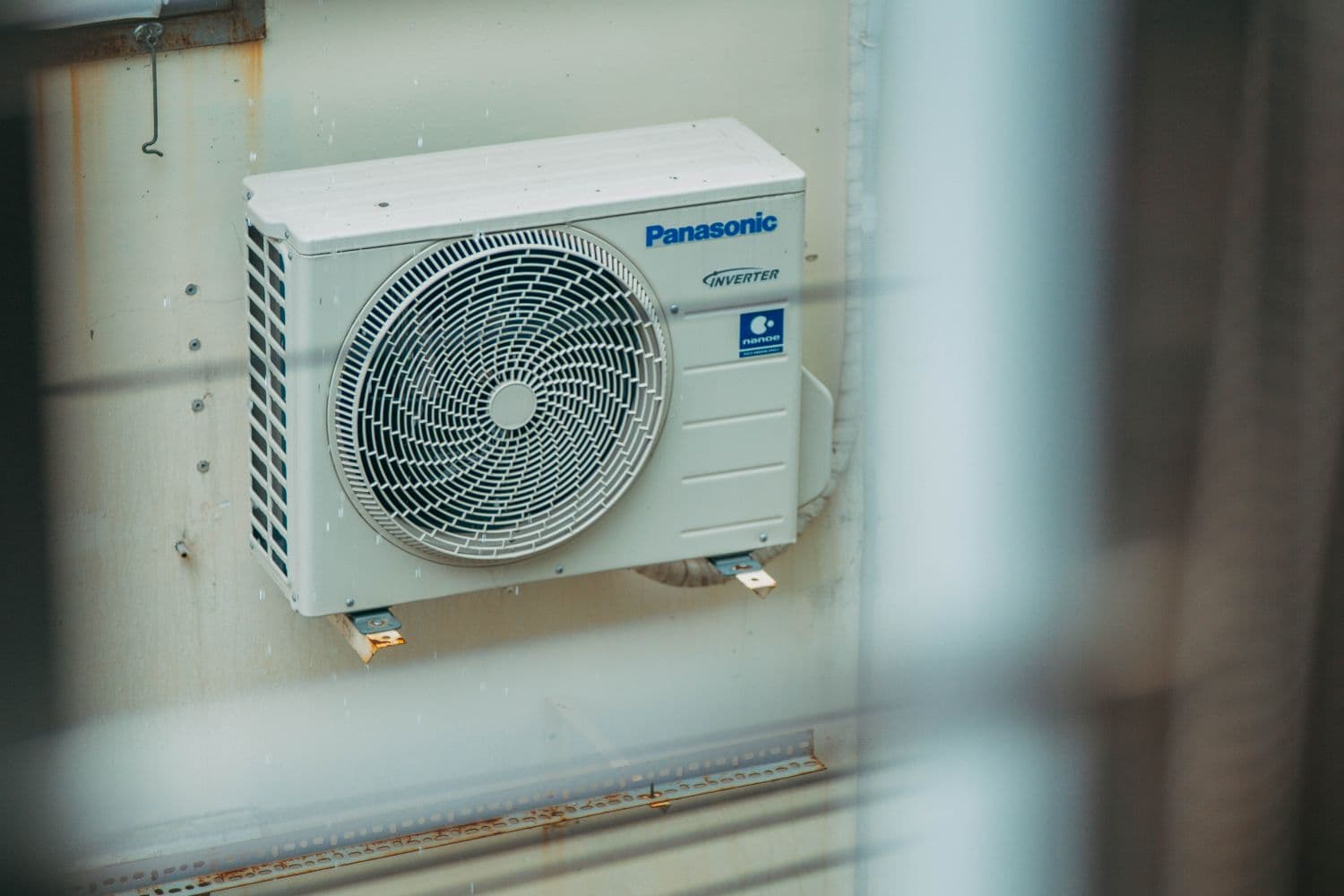
On cooling plant the conditions in this corpus cluster on a short list of requirements: a noise assessment submitted and agreed before the unit is installed, a limit on what the outdoor unit may emit set by reference to the background noise already present at nearby windows, an acoustic enclosure or anti-vibration mounting, restricted operating hours, and an obligation to keep the plant maintained to the standard the assessment assumed.
We do not publish a specific decibel figure on this page. The limit that a permitted-development installation of an air-to-air heat pump has to meet comes from an installation standard we have not yet locked to its primary source, and a number we cannot cite properly is worse than no number. Frequency is what this data supports, so frequency is what it reports.
Why cooling plant attracts them
This part is our reading of the pattern rather than something the data states. An outdoor condenser is external plant that runs for hours at a stretch, often on a rear elevation or a boundary within a few metres of somebody else's window, and it runs hardest on exactly the still summer nights when windows are open. Residential amenity is the standard an officer applies, and noise is the strand of amenity that can be measured, specified and enforced. So it becomes a condition rather than an argument.
The planning route matters here too. Since 29 May 2025 an air-to-air heat pump, which heats as well as cools, can be permitted development on a house within size, siting and noise limits, while a cooling-only unit does not get that route and needs a full planning application whatever the property. A full application is where an officer writes conditions, which is one reason the cooling slice carries so many of them.
These are indicative figures drawn from decided applications, not a statement by any council and not legal advice - confirm your own position with your Local Planning Authority before you install.
What the pattern means for an application
Read the finding for what it is: on this evidence the likely obstacle to cooling a home is not a refusal, it is a requirement. Applications in this corpus meet a condition far more often than they meet a rejection, and the conditions concentrate on where the unit goes and on showing what it will emit once it is running.
Siting is the variable the applicant controls. A condenser positioned away from a neighbour's window and boundary answers the amenity question before the officer asks it, and it is the same question that turns up on the refusal side - noise is among the grounds cited when a cooling application is refused, which is the subject of the refusal-grounds analysis.
What this data does not show
The conditions are a sample of documents, not of decisions. A condition can only be counted where the decision document was acquired and the reasoning extracted, and we hold documents for a minority of the corpus: 558 applications on the cooling slice have extracted conditions. That is a real limit and it cuts both ways, because it is a sample of the applications whose paperwork we hold rather than a random sample of applications.
The baseline is the same corpus, not a national register. The 155,641 comparison conditions are every extracted condition we hold across all application types, which is the fairest available baseline precisely because it carries the same acquisition bias as the numerator. It is not a count of every condition issued in the United Kingdom.
Topics are a classification, not a legal reading, and not a partition. A condition counted under noise is one whose wording is about sound, and the same condition can be counted under another topic as well. Whether a condition is lawful, precise or enforceable is a question for a planning professional, not for a histogram.
It is a keyword match, not a register. Applications enter the cooling slice when the applicant's own description mentions cooling or heat-pump plant, and the term list is tuned for precision over recall. Read every count as "applications we can identify as cooling plant", never as "all cooling applications in the United Kingdom".
Counts are a floor, not a total. The corpus is being backfilled authority by authority in alphabetical order and has not reached every council, so a low count can mean a thin backfill rather than thin demand. 287 English local planning authorities hold at least one application in the slice today, and that number rises as the backfill runs.
Some applications sit outside every per-council figure. 1,738 of the 19,260 (9%) applications in the slice carry no postcode that resolves to a district, so they are counted nationally and excluded locally rather than quietly assigned to a neighbour.
"Decided" means decided. Only applications with an outcome of approved, approved with conditions and refused are counted. Withdrawn and undetermined applications are left out entirely, on either side of every proportion on this page.
See this for your own council
A national pattern is the wrong unit for a decision about one house. We publish a cooling planning report for each of the 75 English local planning authorities holding at least 20 decided applications in the slice, and no report at all for the ones that do not - the bar is published rather than quietly met. Start at the council reports.
The planning hub covers the England-wide position and links to a planning page for every area we cover, each with its own local figures and its own sample sizes. The companion analysis to this page is why councils refuse cooling applications.
Planning-data attribution
Planning figures are computed from decided planning applications published by UK local planning authorities on their statutory planning registers, aggregated via PlanIt. Contains public sector information licensed under the Open Government Licence v3.0. Figures are indicative and are not a statement by any council. Data as of September 2026. See all data sources.
Use this data
The figures on this page are free to reuse in reporting and research with a credit to GetComfort and a link to this page. The download carries every published topic with both denominators; topics below the disclosure floor are counted but not named, exactly as on the page.
Download the figures (CSV)Suggested citation
GetComfort (2026). Noise conditions on air conditioning applications. https://getcomfort.co.uk/planning/ac-noise-conditions. Data as of 25 September 2026.
Check your own home
Enter your address for a property-specific planning verdict, the right cooling system, and an indicative cost.
- Address
- Confirm
- Questions
- Plan
Let's look at your home
We use property data to pre-fill the boring bits - no long forms, and we never cold-call you.
Frequently asked questions
Will my council put a noise condition on my air conditioning application?
It is common. Of the 2,383 extracted planning conditions we hold on cooling and heat-pump applications in the United Kingdom, 322 carry a noise topic (13.5%), against 2,763 of the 155,641 (1.8%) across all planning applications, and 237 of the 558 applications we hold conditions for carry at least one. A condition is attached to an approval, so it is a requirement to meet rather than a refusal, and your own council's position is a matter for your Local Planning Authority.
Is an approval with conditions still an approval?
Yes. Approved and approved with conditions are both approvals, and both are counted as such in every figure we publish. The condition sets out what has to be done, when, and to what standard, most often before the unit is installed.
What noise limit will the condition set?
We do not publish a decibel figure. The limit for a permitted-development installation of an air-to-air heat pump comes from an installation standard we have not yet verified against its primary source, and conditions on a full application are commonly written relative to the background noise already measured at nearby windows rather than as a fixed number. Your installer sizes and sites the unit to meet whatever the condition specifies.
Is noise the most common condition on a cooling application?
No, and the honest answer matters. Three procedural conditions that attach to consents of every kind sit above it by volume. Noise is carried by 322 of the 2,383 (13.5%) extracted conditions on the cooling slice, against 2,763 of the 155,641 (1.8%) across all applications, which makes it the topic that separates cooling from everything else rather than the topic that appears most.
Does an air-to-air heat pump avoid this?
Not the noise requirement itself. Since 29 May 2025 an air-to-air heat pump, which heats as well as cools, can be permitted development on a house within size, siting and noise limits, while a cooling-only unit does not get that route and needs a full planning application. Where an air-to-air heat pump takes the permitted-development route, a limit written into the rules replaces a condition written by an officer, and both still turn on where the unit goes. This is indicative guidance, not legal advice.
Every home is different - your floor, aspect, EPC band, heating type and conservation status all change the answer. Our free cooling checker pre-fills your home from public property data (EPC and UPRN records) and tells you on screen straightaway whether your home needs a full planning application, which cooling system fits it, and what it is likely to cost. No phone call, no waiting.
Check my homeYou will see your full cooling plan instantly. If you would like us to email it to you, or to have a single accredited local installer contact you about a free survey, you choose that at the end - we only get in touch if you ask.
These are indicative figures drawn from decided applications, not a statement by any council and not legal advice - confirm your own position with your Local Planning Authority before you install. Every figure above follows our published methodology.