Quick answer
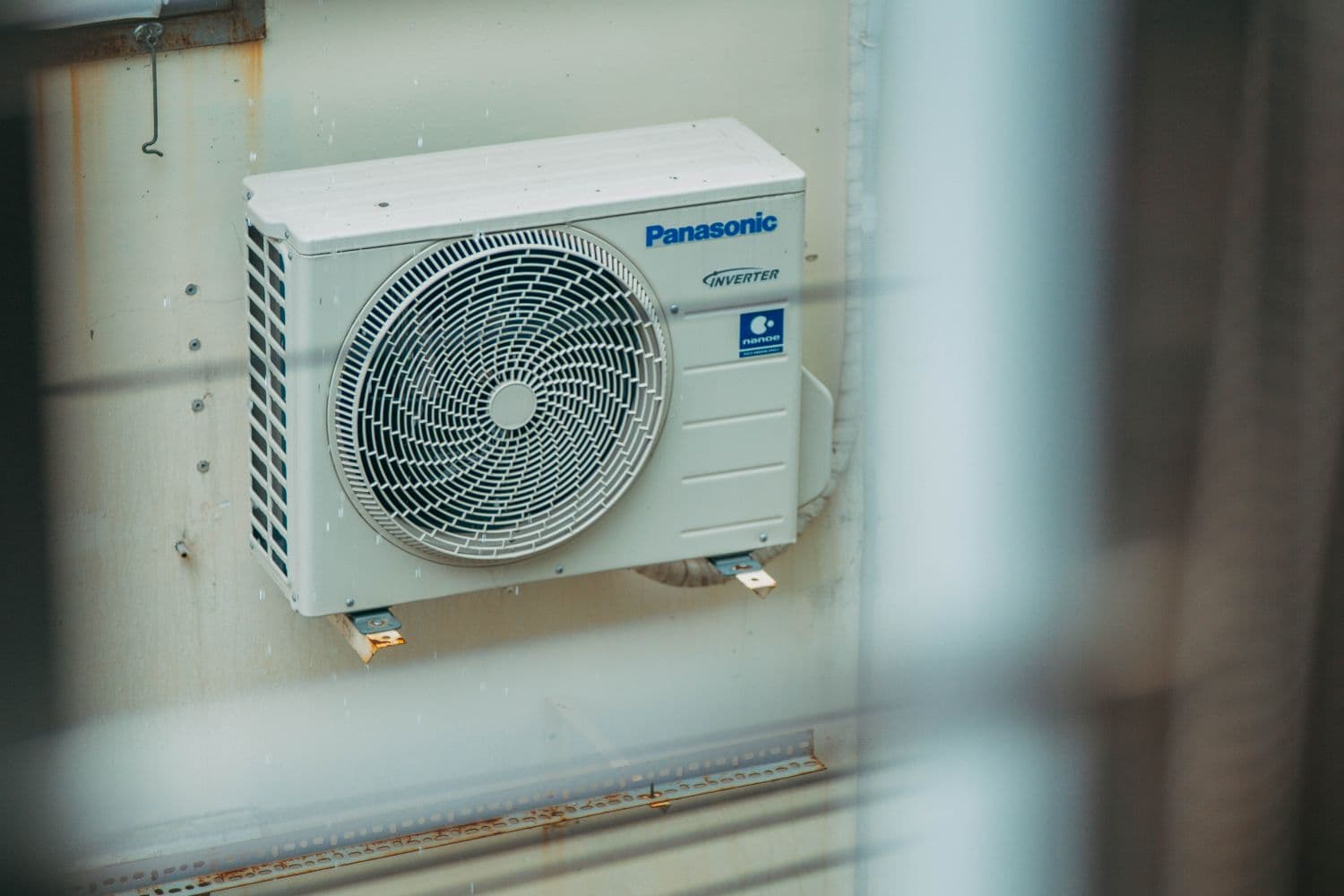
Almost always. Amber Valley approved 30 of the 30 cooling-plant applications it has decided, a rate of 100% spanning every development type and including 11 householder cases. A cooling-only unit still needs a full planning application, because the permitted-development route on a house belongs only to an air-to-air heat pump, which heats as well as cools.
What Amber Valley has decided
Amber Valley has decided 30 planning applications mentioning air conditioning or other cooling plant, 30 of them approved and 0 refused. That is a slim record, just past the point at which we will publish a rate from it at all.
Amber Valley's record holds 3 more that never reached a determination, whether because they remain live or because the applicant pulled them. Everything below excludes them, so the rate describes determined cases only.
That is an approval rate of 100% across 30 decisions covering every development type, 11 of them householder applications - close to universal. A rate this high usually says as much about what gets submitted as about what gets waved through: schemes likely to fail tend to be withdrawn rather than decided, and a withdrawal is not in this denominator.
The scope matters as much as the number. Commercial and mixed-use plant makes up a large share of any council's cooling caseload, so an all-development rate is a weaker guide to a domestic application than its size suggests.
We stop short of a householder-only percentage for Amber Valley. At 11 decided householder applications the sample is too thin, and a rate drawn from it would read as far more certain than the evidence allows.
The air-to-air heat pump, which heats as well as cools and is the only equipment that can be permitted development on a house, appears in none of Amber Valley's decided applications by name. Nationally the count is similarly close to zero: this is a category planning departments have barely met.
Air-source heat pumps, counted separately
There is little to choose between the two here: 100% of the 28 decided applications mentioning an air-source heat pump were approved by Amber Valley, a whisker from its cooling-plant record.
These two figures are never added, averaged or read as one. Most air-source schemes heat rather than cool, and an application mentioning both sits in both counts.
The distinction is the whole point: an air-to-air heat pump, which heats as well as cools, can be permitted development on a house, and a cooling-only unit cannot.
The rule these decisions are made under
Since 2025-05-29, England's permitted-development rules let a house fit an air-to-air heat pump, which heats as well as cools, without a planning application in many cases, within set size, siting and noise limits. A unit that only cools has no equivalent route and needs a full application whatever the property.
That is why the decisions above matter more than they would have before the change. Every cooling-only installation now crosses a planning officer's desk, so the council's posture is not background information, it is the decision.
Flats are the sharpest exception, here as everywhere in England: the permitted-development right for an outdoor unit belongs to the house rather than to a flat within it, so a flat will usually need freeholder or managing-agent consent as well as planning permission.
What gets refused, and what gets attached
What those refusals were FOR is a national question at the volume of officer reasoning currently published, not a council-level one, and we do not pretend otherwise. Both findings are set out with their sample sizes: why cooling applications get refused and the conditions councils attach to an approval.
Every council we can publish a figure for is listed on the council index.
What this data does not show
Applications are identified from their own description, so every count on these pages means applications mentioning cooling equipment, not every cooling installation in the area. An application that fitted the same kit but described it as external plant is not in these figures, which makes them a floor on activity rather than a census.
Each application is assigned to Amber Valley through the postcode on the application itself. Of the 33 applications recorded for this authority, 100% carry a location we could resolve; nationally 1738 of 19260 applications could not be tied to a district at all and sit outside every figure on this site rather than being quietly assigned somewhere.
What this page cannot tell you is what will happen at your address. It has no view of your elevation, your neighbours' windows, whether your home sits in a conservation area, or whether it is a listed building - and a neighbour's approval settles none of those. This is indicative guidance drawn from public planning records, not legal advice: confirm the final position with your Local Planning Authority before you install.
Planning figures are computed from decided planning applications published by UK local planning authorities on their statutory planning registers, aggregated via PlanIt. Contains public sector information licensed under the Open Government Licence v3.0. Figures are indicative and are not a statement by any council. Data as of September 2026. See all data sources.
Recent decisions you can check yourself
These are real applications Amber Valley has decided, taken from its own statutory planning register. Every one links back to the council's entry, so nothing here has to be taken on trust.
12 most recent of 58 decided
- AVA/2026/0006Approved
Proposed rear single storey extension and air source heat pump with solar panels to the roof...
- AmberValley/AVA/2025/0282Approved
Retrospective planning application to retain 8 wall mounted refrigeration condensing units and 3 roller shutter doors...
- AmberValley/AVA/2025/0362Approved
Installation of air source heat pump...
- AmberValley/AVA/2025/0101Approved
Replacement of existing oil boiler for air source heat pump system with new radiators.
- AmberValley/AVA/2025/0118Approved
Proposed installation of 2 no. air conditioning units...
- AmberValley/AVA/2025/0260Approved
Installation of air source heat pump...
- AmberValley/AVA/2024/0647Approved
Full application for the retention of extension works to include a single storey rear extension with 2 roof lanterns...
- AmberValley/AVA/2025/0007Approved
Re position of retrospective air con units and installation of acoustic fences...
- AmberValley/AVA/2024/0758Approved
Installation of an Air Source Heat Pump (ASHP), 12kW Exceeding 0.6M3 to rear elevation...
- AmberValley/AVA/2024/0830Approved
Installation of Air Source Heat Pump (replacing Gas Boiler)...
- AmberValley/AVA/2024/0601Approved
Single storey rear extension, garage conversion at Installation of 3 x Air Source Heat Pumps...
- AmberValley/AVA/2024/0705Approved
Construction of single storey front extension, open timber covered shelters on both side elevations, driveway to be...
46 further decided applications are held for Amber Valley and counted in the figures above. They are not listed here to keep the page readable, not because they say anything different.
Statutory planning-register entries published by Amber Valley. Applicant, agent and case-officer names and full addresses are not shown. Descriptions are the applicant's own wording, shortened. Each entry links to the council's own register, which is the authoritative record.
Planning-application data
The applications listed here are entries on the statutory planning register of the named local planning authority, kept under section 69 of the Town and Country Planning Act 1990 and article 40 of the Town and Country Planning (Development Management Procedure) (England) Order 2015. Aggregate figures on this page contain public sector information licensed under the Open Government Licence v3.0.
We show only the application reference, a shortened description, the decision and its date. We do not show applicant, agent or case-officer names, or full addresses. We publish decided applications only. The council's own register is the authoritative record and every entry links to it; where this page and the council disagree, the council is right.
GetComfort is not a planning authority and this is not planning advice. If an entry here concerns your property and you would like it removed, email [email protected] and we will remove it. See all data sources.
Check your own Amber Valley home
Enter your address for a property-specific planning verdict, the right cooling system, and an indicative cost.
- Address
- Confirm
- Questions
- Plan
Let's look at your home
We use property data to pre-fill the boring bits - no long forms, and we never cold-call you.
Frequently asked questions
Does Amber Valley approve air conditioning applications?
Nearly always, on the record we hold. 100% of the 30 applications mentioning cooling plant that Amber Valley has decided were approved, across all development types and including 11 householder applications. A rate that high partly reflects which applications reach a decision at all, since withdrawn ones are not counted.
Do I need planning permission for air conditioning?
For a cooling-only unit, yes, always. Since May 2025 the permitted-development route on a house is open only to an air-to-air heat pump, which heats as well as cools; a unit that only cools is excluded from it entirely and needs a full application. Flats are a further exception, because the permitted-development right sits with the house rather than the flat within it.
How many air conditioning applications has Amber Valley refused?
None. All 30 of the decided applications mentioning cooling plant that Amber Valley has determined were approved. That is a real result rather than a data gap, though it says nothing about applications withdrawn before a decision.
Is this the approval rate for homes, or for all buildings?
All buildings. Commercial and mixed-use schemes are a large share of any cooling caseload, and Amber Valley has decided 11 householder applications, which is below the sample size we publish a separate domestic rate from. The count is disclosed so you can see the denominator you are actually working with.
Every home is different - your floor, aspect, EPC band, heating type and conservation status all change the answer. Our free cooling checker pre-fills your home from public property data (EPC and UPRN records) and turns this council-level picture into a property-specific planning verdict for your own Amber Valley address, alongside the right cooling system for your home and an indicative cost. No phone call, no waiting.
Check my homeYou will see your full cooling plan instantly. If you would like us to email it to you, or to have a single accredited local installer contact you about a free survey, you choose that at the end - we only get in touch if you ask.
This is indicative planning guidance drawn from public records, not legal advice - always confirm the final position with your Local Planning Authority (LPA) before you install. Every figure above follows our published methodology.