
Quick answer
Overheating risk for the typical Mansfield Victorian terrace is moderate, so the usual fix is air-to-air heat pump, about £4,600-£5,290 installed. An air-to-air heat pump replacing qualifying fossil-fuel or electric heating can attract a grant through an accredited installer; kept alongside your boiler it is private-pay. Check your address for the exact verdict.
No home type is more common in Mansfield's tracked stock than the victorian terrace, with 7,607 on the EPC register and about 22% of the town's EPC-rated homes dating from before 1919. Houses of that era were built without a summer-ventilation strategy, so still, hot evenings make upstairs rooms hard to sleep in.
If your Mansfield Victorian terrace gets uncomfortably hot the moment summer arrives, you are not the only one - and with around 7,607 of them across the borough (13.9% of local homes), you are in common company. We model a typical Mansfield Victorian terrace at about 60 out of 100 for overheating - "moderate" - which is why fans and open windows run out of road by midsummer. Here is the property-specific answer: the right cooling system for your home, what it realistically costs, and whether you need planning permission - before you speak to a single installer.
Why Victorian terraces in Mansfield overheat
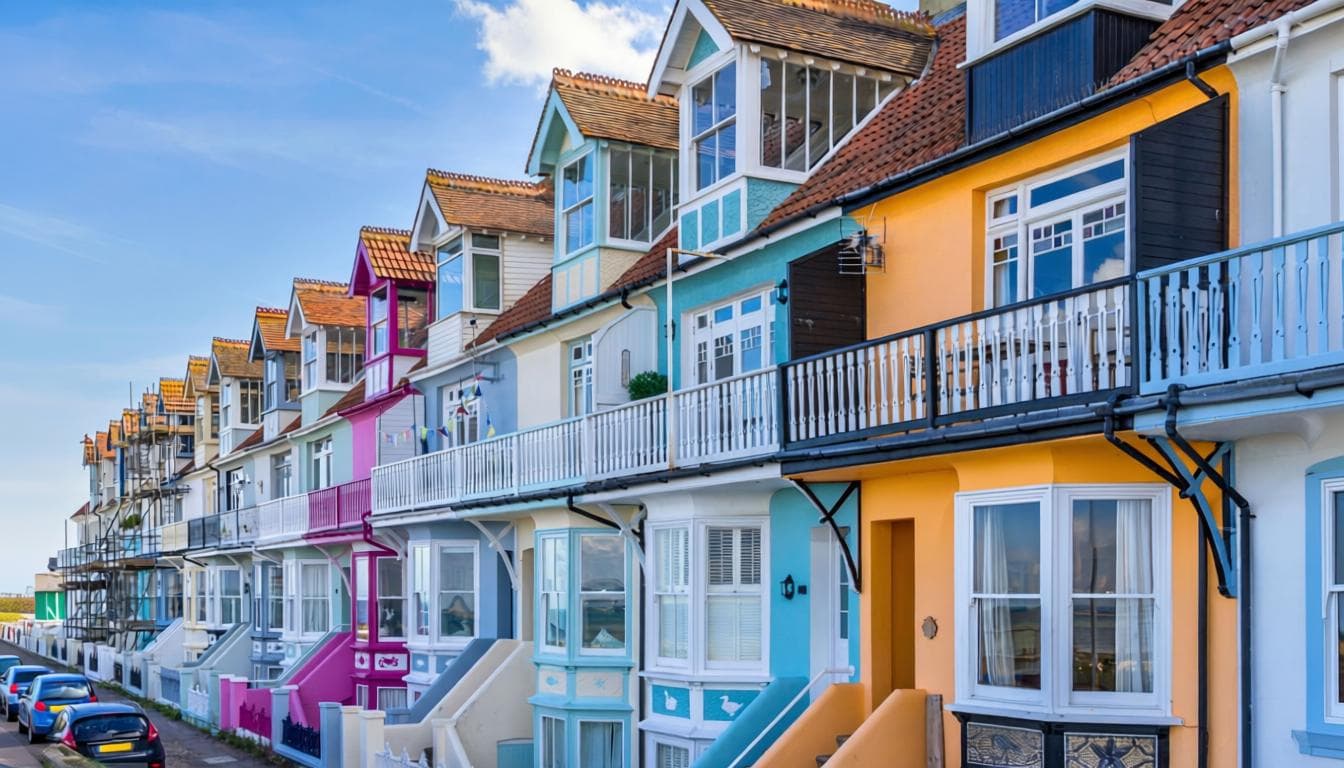
The problem with a solid-brick Victorian home is thermal mass. Those thick masonry walls, with no cavity, quietly absorb heat all through a hot day and then release it back into your rooms overnight - which is why the house often feels hottest at 11pm rather than 3pm, and why simply opening the windows after dark does not rescue you the way it would in a lighter building. Pre-1919 terraces were also built front-to-back with no summer-ventilation strategy in mind, so on a still, warm evening there is little cross-breeze to purge that stored heat. Because the walls keep re-radiating heat after sunset, night ventilation alone often cannot recover a room like this, which is what pushes many owners of these homes toward active cooling rather than fans and open windows. For a typical Mansfield Victorian terrace, the median floor area is around 78 sqm - that is a real amount of solid-wall mass to charge up through the day and give back overnight - the more floor area, the more mass banking heat. Our urban heat island measure, built from Census 2021 density and settlement size, puts none of Mansfield residents in high-exposure neighbourhoods, 71% in medium and 29% in low - for the typical home, nights usually cool enough to take some heat back out, but that relief fades in a prolonged hot spell.
Victorian terraces in Mansfield: by the numbers
14% of Mansfield homes are victorian terraces
7,607 of 54,601
78 m²
median floor area
£821
median annual heating cost
EPC band distribution
7,607 Victorian terraces in Mansfield with an EPC on record
Greener bands are more energy-efficient; red bands (E-G) are poorer-fabric homes that trap summer heat.
| EPC band | Homes | Share |
|---|---|---|
| A | 0 | 0% |
| B | 39 | 1% |
| C | 1,173 | 15% |
| D | 3,624 | 48% |
| E | 2,103 | 28% |
| F | 558 | 7% |
| G | 110 | 1% |
When these homes were built
Construction era of 7,607 Victorian terraces in Mansfield
- pre-1919 100%
- 1919-1944 0%
- 1945-1999 0%
- 2000+ 0%
| Era | Homes | Share |
|---|---|---|
| pre-1919 | 7,607 | 100% |
| 1919-1944 | 0 | 0% |
| 1945-1999 | 0 | 0% |
| 2000+ | 0 | 0% |
Real EPC and property-intelligence data via HomePortfolio, aggregated for victorian terraces in Mansfield. Data as of 11 July 2026.
Read past the chart to what it implies: the fabric sits mid-scale, typical converted stock that does an average job in either season, and these are predominantly period, solid-wall construction whose thick masonry banks heat by day and gives it back after dark, so the heat that gets in does not leave easily. Set against that, in Mansfield air quality (PM2.5) averages about 6.4 µg/m³ and daytime noise around 41 dB - together these decide whether night ventilation is a real option here. This is historic ground, too: a meaningful minority of these homes sit inside a conservation area and some sit close to a listed building - which is why the planning route for an outdoor unit needs more care here than the approval rate alone suggests. Being near a listed building is not the same as your home being listed.
Summers in Mansfield, now and ahead
Summers in Mansfield are getting hotter
Days a year above 30°C, from the Met Office projections for your council area
- Nights that stay above 20°C
- 0 now, about 0 at +2.5°C
- Cooling demand (degree days)
- 40 to 69 (+73%)
What the data says about Victorian terraces in Mansfield
Start with what these homes are built from. In Mansfield, 48% of these homes carry an EPC band of D. That is middling on the EPC scale, the everyday rating for London's converted and period stock, and it tells you the fabric is doing an average job in both directions. The full spread reads 48% at band D, 28% at band E, 15% at band C, so the picture is a range, not a single rating. At 100% pre-1919, this is almost entirely solid-wall stock, with the thick masonry that stores and re-radiates heat.
Can you cool this home by opening a window at night?
The next question is whether free night ventilation is realistic here. At about 41 dB the street is quiet, so night ventilation is a real option and worth trying before any system goes in. Local PM2.5 air quality, around 6.4 µg/m³, is not the limiting factor.
How the planning numbers look in Mansfield
On the paperwork, only 464 of the 7607 Victorian terraces we profile in Mansfield sit inside a conservation area, around 6%, so most homes of this type here are outside one. Mansfield Council waves through the large majority of recent planning applications around this stock, though each still turns on the siting. In conservation areas such as The Park and Crow Hill Drive, expect the external siting to draw more scrutiny.
A worked cooling plan for a typical Victorian terrace
Worked example · one Victorian terrace in Mansfield
Assumes south-facing, EPC band D, victorian or older (pre-1919), 3 rooms to cool.
Recommended system
Air-to-air heat pump
Cools in summer and heats in winter - the only cooling system the £2,500 grant can fund.
Replacing your mains-gas heating with an air-to-air heat pump cools in summer and heats in winter, and qualifies for the £2,500 Boiler Upgrade Scheme grant when installed by an MCS-certified installer.
Boiler Upgrade Scheme
£2,500 grant - eligible
Eligible: replacing your mains-gas heating with an air-to-air heat pump via an MCS-certified installer qualifies for the £2,500 Boiler Upgrade Scheme grant.
Not claimable yet
The grant itself is law and your eligibility is real, but no installer can be MCS-certified for air-to-air yet, so no Boiler Upgrade Scheme voucher can be issued today. Certified air-to-air products are already listed; installers can certify once the certification bodies gain UKAS accreditation, and MCS has not set a date for that. Get quotes now, but treat the grant as pending rather than banked.
- Installed by an MCS-certified installer
- Residential property only
- Existing qualifying heating system is decommissioned, not retained alongside the new system
- Not combined with another government heating grant for the same install
- The installer must be MCS-certified for air-to-air before a voucher can be issued - no installer can be yet
Indicative cost
- Typical install
- £4,600-£5,290
- Less grant
- −£2,500
- You pay
- £2,100-£2,790
- Indicative UK install cost, sourced from 2026 trade guides - actual quotes vary by property and installer.
- Sized to heat 4 rooms, not just the 3 you want cooled: to qualify for the grant the heat pump has to meet all of your home's space heating.
- Net cost shown after the £2,500 Boiler Upgrade Scheme grant.
If this home keeps its boiler
Multi-split air conditioning, no grant
Cooling added alongside a boiler you keep does not qualify for the grant. It is fitted by an F-Gas / REFCOM engineer, typically £3,500 to £7,000 installed.
Confirm with your local planning authority
- Whether this property is a listed building materially changes the answer - this was not confirmed.
- External condenser units must meet permitted-development noise limits regardless of planning route.
- This is an indicative assessment only - always confirm the final position with your Local Planning Authority (LPA) before installing.
Illustrative only. Your own floor, aspect, heating and conservation status change the result. Grant rules as of August 2026, and subject to change. Check your own address
The right system, and the £2,500 grant honestly
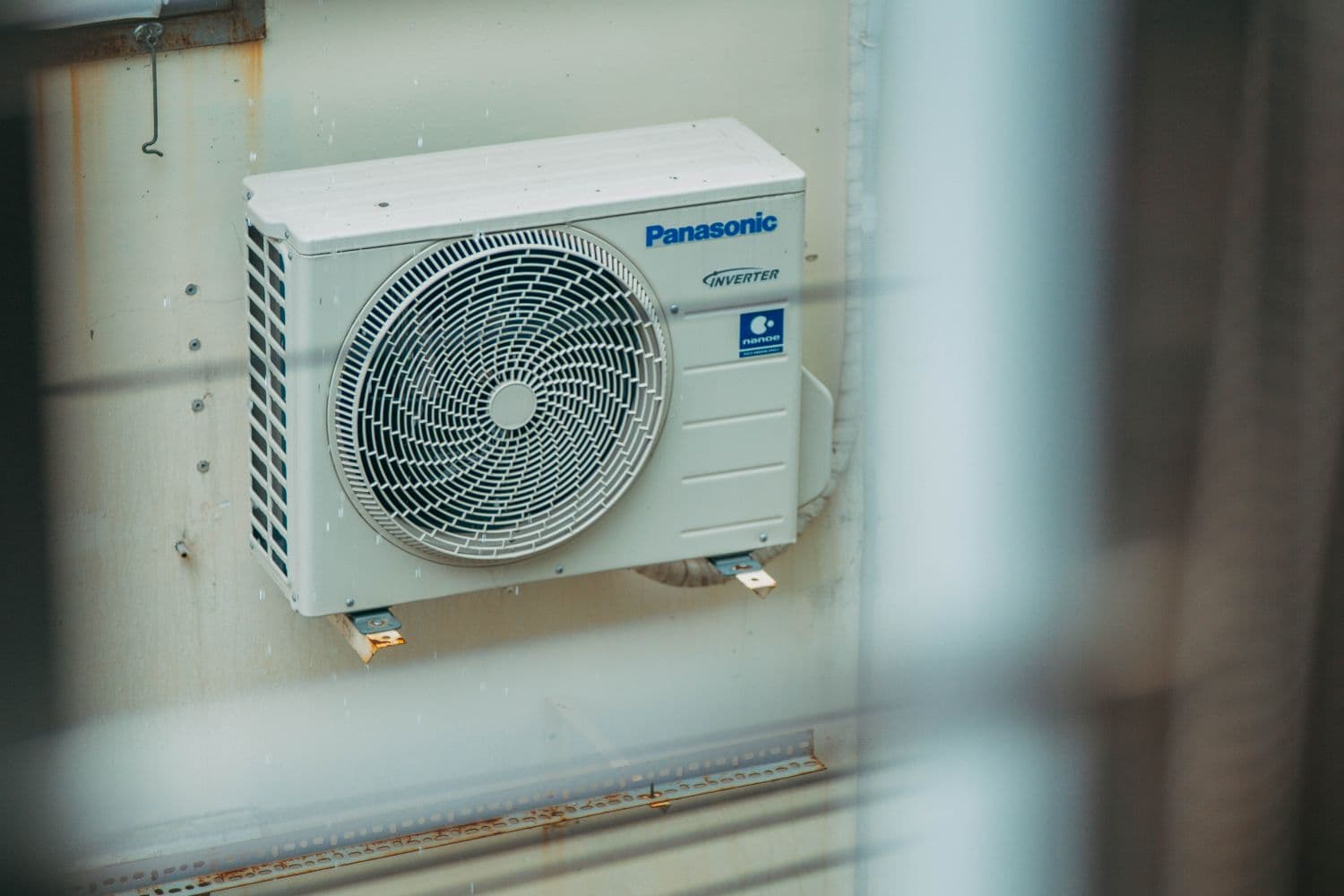
For most Mansfield Victorian terraces the strongest option is an air-to-air heat pump, because it heats as well as cools and can replace your existing heating entirely. There are two honest ways this plays out, and which one applies to you turns on a single decision: whether you replace your heating or keep it. For context, a typical Mansfield Victorian terrace runs around 78 sqm and already costs about £821 a year to heat - the baseline the figures below are measured against.
Branch 1 - replace your gas heating, and the £2,500 grant is in play. The £2,500 air-to-air grant (Boiler Upgrade Scheme) only pays when the heat pump replaces your fossil-fuel or electric heating and is fitted by an MCS-certified installer. So if you take out your existing system and let the air-to-air heat pump handle your heating as well as your cooling, a job costing around £4,600-£5,290 installed can come down to roughly £2,100-£2,790 net. Eligibility is per-property and depends on your current heating and the installer's accreditation - our checker confirms it against your address. (Grant rules as of August 2026 and subject to change.)
Branch 2 - keep your boiler and simply add cooling, and the grant does not apply. If you want to keep your existing heating and only add cooling, that is a private-pay job - a cooling-only add-on that keeps your boiler is not eligible for the £2,500 grant, whatever your heating type. The sensible choice here is usually a single-split air conditioning unit (around £1,500-£3,000 installed), carried out by an F-Gas / REFCOM-registered engineer - not MCS, which applies only to the grant-eligible heat-pump route above.
We match you to the right accreditation for whichever path fits your home: MCS for the grant-eligible heat pump, F-Gas / REFCOM for a pure cooling install. For a typical Victorian terrace in Mansfield at around 78 sqm, sized to that footprint, our checker leans toward air-to-air heat pump, but your own floor, aspect and heating decision move the answer - which is the whole point of checking your specific address.
What cooling costs in Mansfield in 2026
| Air-to-air heat pump | Single-split AC | |
|---|---|---|
| What it does | Cools in summer and heats in winter | Cools only |
| Typical install cost | £4,600 - £5,290 | £1,500 - £3,000 |
| The £2,500 grant | If you replace fossil-fuel or electric heating, via an MCS installer | Not eligible |
| Cost after grant | £2,100 - £2,790 (if eligible) | £1,500 - £3,000 |
| Installer accreditation | MCS | F-Gas / REFCOM |
Planning permission in Mansfield
Planning permission is more straightforward here than in a lot of the country. Mansfield has relatively low conservation-area coverage, so most houses can fit an outdoor condenser under permitted development without a fresh application - flats are still the exception, and a front or side unit there will usually need planning permission from Mansfield Council. In Mansfield, conservation areas such as The Park, Crow Hill Drive and Pleasley Park and Vale are where this bites hardest. One recent rule change matters here. As of May 2025 an air-to-air heat pump counts as a heat pump for planning, so a house can often install one under permitted development within the size and siting limits - whereas a pure cooling unit, which only cools, still needs a full planning application. Which system fits your home therefore decides which planning route you are on. For a typical Victorian terrace here, our checker's read is: it depends on details we cannot confirm from public property data - such as conservation-area or listed status - so treat this as indicative and confirm directly with the council. External condenser units must meet permitted-development noise limits regardless of planning route. This is an indicative assessment only - always confirm the final position with your Local Planning Authority (LPA) before installing. For context, Mansfield Council waves through the large majority of recent planning applications around this stock, though each still turns on the siting. Mansfield carries genuinely low conservation-area coverage (about 3% of EPC-certified homes), which makes an external unit a lower-friction proposition here than in a heritage-dense borough for most addresses - a real advantage, not a workaround. It is entirely achievable - Mansfield Council approves these regularly - yet it remains a step rather than a rubber stamp, and one to pin down for your specific address before committing. Take this as indicative guidance rather than legal advice.
95%
of recent Mansfield planning applications approved
6%
of Victorian terraces in Mansfield sit inside a conservation area
3%
within 30 metres of a listed building
Conservation-area and listed-building status both tighten the planning route for an outdoor unit. Sitting near a listed building does not by itself make a home listed, so the checker confirms your property individually.
Conservation-area and listed-building records © Historic England 2026, via planning.data.gov.uk, used under the Open Government Licence v3.0. Data as of July 2026. See all data sources.
Permitted development, or a planning application?
Air-to-air heat pump (heats and cools)
Can be permitted development
Can be permitted development on a house under Class G, within size, siting and noise limits, because since 29 May 2025 a unit that also heats is no longer excluded for cooling.
Pure air conditioning (cooling only)
Needs planning permission
Not permitted development - a cooling-only condenser fails the Class G "not solely for cooling" condition and there is no other PD class for it, so it needs a full planning application.
| Air-to-air heat pump | Cooling-only AC | |
|---|---|---|
| Does the permitted-development route apply? | Yes on a house, within the Class G limits below (it heats as well as cools). | No - a cooling-only unit needs full planning permission. |
| Property type | Houses get the Class G right directly. For a flat the right sits with the whole building (one unit for the block) and needs freeholder consent, so in practice a flat almost always needs permission. | Planning permission required either way. |
| Maximum outdoor-unit size | Up to 1.5 cubic metres on a house (0.6 cubic metres for a block of flats). | Not applicable - planning permission required. |
| Number of units | Up to two on a detached house; otherwise one. | Not applicable - planning permission required. |
| Where it can go | Not on a pitched roof; on a flat roof it must sit at least 1 metre from the edge; not on a wall above ground-floor level that faces a highway. | Set by the planning application. |
| Conservation area | Stricter - it must not go on any wall or roof that faces a highway, and an Article 4 direction can remove the right entirely. | Planning permission required. |
| Listed building | Excluded from permitted development; listed-building consent is needed regardless. | Excluded from permitted development; listed-building consent is needed regardless. |
| Noise | Must pass the MCS Planning Standards (MCS 020) sound test, measured at the nearest neighbour's door or window. | Any planning permission will set its own noise conditions. |
England only, as of 29 May 2025 (reflects the 29 May 2025 Class G change, SI 2025/560). Sources: GPDO 2015, Schedule 2, Part 14, Class G (air source heat pumps); SI 2025/560 (the 2025 amendment).
This is an indicative summary of England permitted-development rules for outdoor units, not legal advice. Rules change and vary locally - confirm the final position with your Local Planning Authority before installing.
Common questions about cooling a Victorian terrace
Does a top-floor or Victorian terrace in Mansfield really overheat?
Comfortably, yes. We put a typical Mansfield Victorian terrace near 60 out of 100 on our overheating scale ("moderate"). Mansfield holds around 7,607 homes of this type - 13.9% of the borough's certified stock - and roof heat gain, thin thermal mass in older stock and the local heat-island effect combine to leave homes like this uncomfortable from late June, whatever the thermostat suggests.
What is the best cooling system for a Victorian terrace in Mansfield?
An air-to-air heat pump is usually the best answer for a Mansfield Victorian terrace: one near-silent, room-by-room unit that cools in summer and heats in winter. Prefer to keep your boiler and simply add cooling? A single-split air conditioning unit is the usual private-pay route. For a typical home of this type our checker leans toward air-to-air heat pump, though your floor, aspect and heating decision shift it - which is exactly why checking your own address is worth it. These Victorian terraces average around 78 sqm. A typical Mansfield Victorian terrace already costs around £821 a year to heat.
Can I get the £2,500 grant for cooling my Mansfield home?
Only in one specific case, and it is worth being precise. You are eligible for the £2,500 air-to-air grant (Boiler Upgrade Scheme) only when an air-to-air heat pump replaces your fossil-fuel or electric heating and is fitted by an MCS-certified installer. If you keep your boiler and add cooling as an extra, that is a cooling-only add-on and it is not eligible for the £2,500 grant, whatever your heating type. Eligibility is per-property, so our checker confirms it against your address. (Grant rules as of August 2026 and subject to change.) Given a typical Mansfield Victorian terrace already costs around £821 a year to heat, replacing that heating as part of this route is usually where most of the saving comes from.
Do I need planning permission for air conditioning in Mansfield?
Often, yes - more often than for a house. Permitted-development rights that let a house fit an outdoor unit do not apply the same way to flats, and much of Mansfield sits inside a conservation area, especially around The Park, where an external condenser on a front or side elevation usually needs council permission. It is very doable, but treat it as a step to plan for, not a formality - our checker gives you the likely position for your specific address. For context, Mansfield Council approves the great majority of recent applications around this stock, provided the unit is sensibly placed.
How much does it cost to cool a Victorian terrace?
On 2026 UK trade prices as a rough guide: fitting an air-to-air heat pump here is around £4,600-£5,290, falling to roughly £2,100-£2,790 net when it replaces your heating and qualifies for the grant. A single-split air conditioning unit that leaves your boiler in place is about £1,500-£3,000 installed with no grant. Final quotes shift with access, unit size and pipe runs. A typical Mansfield Victorian terrace currently costs around £821 a year to heat. That heating bill sits alongside the cooling cost above, not instead of it.
If I use the checker, will you cold-call me?
No. The free cooling check shows your full plan on screen straightaway, with no phone call and no waiting. If you would like us to email your plan, or to have a single accredited local installer contact you about a survey, you choose that at the end - we only get in touch if you ask, and you are never sold to five companies at once.
Where does the outdoor condenser unit go on a Victorian terrace?
Typically a rear or side wall, a flat roof, or a tucked-away spot in the back garden, kept clear of the street front - which counts double inside a conservation area. Where it sits shapes both the planning outcome and the pipe run indoors, so decide it early. The checker gives the likely planning position for your Mansfield address.
Is air conditioning noisy in a terraced street?
Today's outdoor units are quiet, roughly a household fridge's hum - but on a narrow terraced street your neighbours are the real consideration. Permitted-development limits cap the noise added at the boundary, so keep the unit away from party walls and bedroom windows. Placed well, it is very manageable.
Can I install air conditioning in a conservation area?
Yes, though generally with planning permission. Councils examine anything visible from the street in a conservation area, so a concealed or rear condenser stands a far better chance than a front-facing one. It is common and achievable - a formal step, not a barrier. The checker flags whether your address is affected.
What size outdoor unit can I fit under permitted development?
It depends on the system. Since 29 May 2025 (SI 2025/560), an air-to-air heat pump - which heats as well as cools - can be permitted development on a house: broadly a unit no larger than 1.5 cubic metres (0.6 cubic metres for a block of flats), and not on a wall above ground-floor level facing a highway, as long as you are not in a conservation area. A pure, cooling-only air conditioning unit does not get that route - it needs a full planning application whatever its size. Flats and conservation areas usually fall outside the permitted-development rights either way, so a unit there typically needs permission. The checker applies this to your address. In Mansfield, that conservation-area exclusion bites hardest around places like The Park.
Check your own Mansfield home
Pre-scoped to a Victorian terrace - enter your address for a plan specific to your property.
- Address
- Confirm
- Questions
- Plan
Let's look at your home
We use property data to pre-fill the boring bits - no long forms, and we never cold-call you.
Every home is different - your floor, aspect, EPC, heating type and conservation status all move the answer. Our free cooling checker pre-fills your home from public property data (EPC and UPRN records) and gives you a property-specific verdict on screen, straightaway: your overheating score, the right system, your real grant eligibility, the planning position and a net cost. No phone call, no waiting.
Check my Mansfield homeYou will see your full cooling plan instantly. If you would like us to email it to you, or to have a single accredited local installer contact you about a free survey, you choose that at the end - we only get in touch if you ask.
Every figure above - overheating scores, costs, grant rules and planning positions - follows our published methodology.
Related cooling guides
The grant and planning in Mansfield
From the GetComfort blog
- How to keep your house cool without air conditioningA room-by-room plan for a UK heatwave: stop the sun before it hits the glass, ventilate at the right hour, and know when passive cooling will not be enough.
- Do you need planning permission for air conditioning?Since May 2025 the answer turns on one thing: whether the unit also heats. The permitted-development rules for England, flats, conservation areas and noise.
- How much does an air-to-air heat pump cost in the UK?Typical installed prices for air-to-air heat pumps by number of rooms, what the £2,500 grant does to the bill, running costs, and what changes a quote.