Key takeaways
- Bedrooms often peak in the evening, as walls and the roof release the day’s stored heat.
- The CIBSE TM59 overheating test flags a bedroom above 26°C for more than about 32 night-time hours a year.
- Keep the sun off the bedroom all day, then ventilate hard from late evening, and move air over the bed with a fan.
- Warm nights are becoming more common: central London's tropical nights (above 20°C) are projected to rise from about 1 a year to about 4 at 2.5°C of warming.
Poor sleep is often the first real cost of a UK heatwave. Bodies need to cool slightly to fall and stay asleep, and a warm, still bedroom gets in the way. The frustrating part is timing: the bedroom is frequently at its hottest just as you go to bed.
Why the bedroom is hottest at bedtime
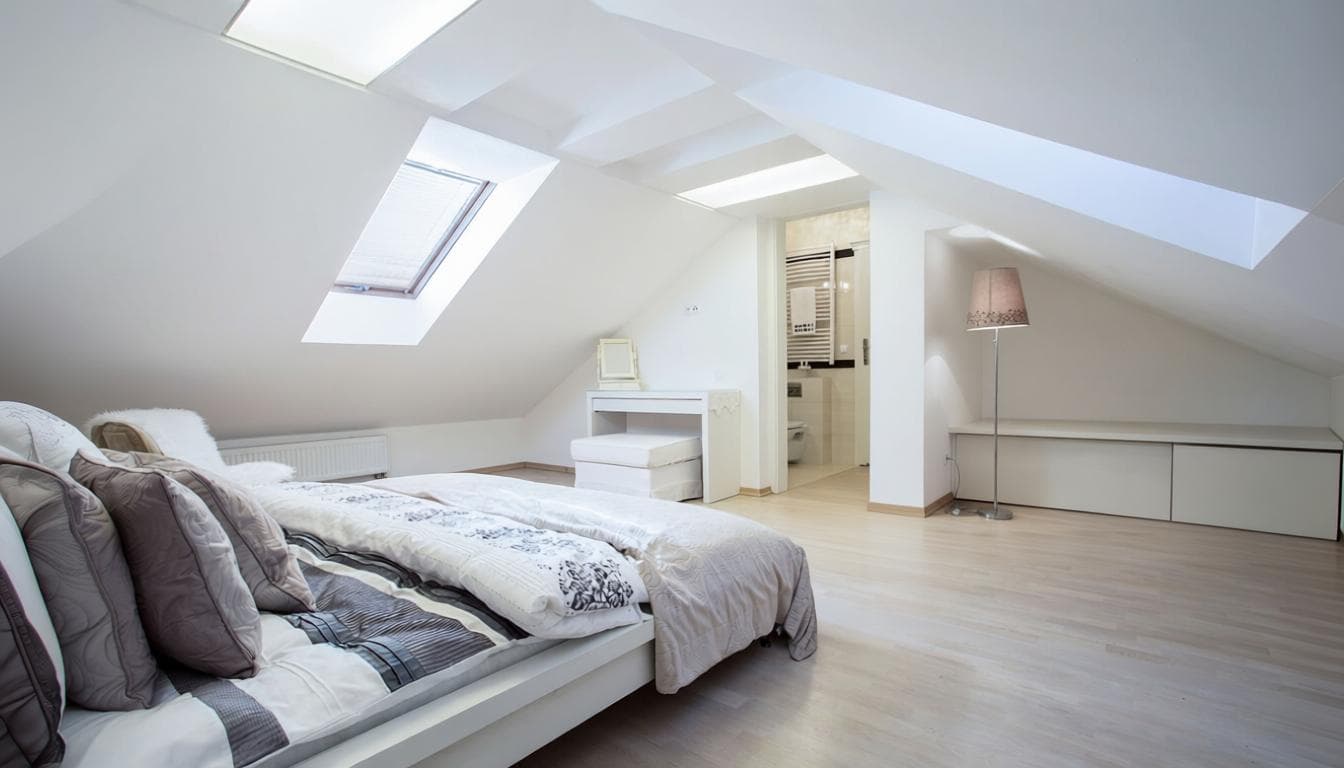
Walls, floors and roofs soak up heat through the day and give it back for hours after the sun has gone. Upstairs bedrooms sit under the roof and above the rest of the house, where warm air collects. And if the windows were open during the afternoon, the room filled with warm air that is still there at 11pm.
A bedtime routine that works
- 1
All day: keep the sun out
Blinds and curtains closed on the bedroom windows before the sun reaches them, and the door shut. - 2
Early evening: cool the rest of the house first
Open windows elsewhere as soon as the air outside is cooler than inside. - 3
An hour before bed: flush the bedroom
Open the bedroom window wide, and a window on the opposite side of the home, to pull the stored heat out. - 4
In bed: move air over you
A fan pointed across the bed helps sweat evaporate. Light cotton or linen bedding, and a thin sheet instead of a duvet. - 5
Through the night
Keep the window open if it is safe and quiet. Use a secure restrictor on the ground floor.
Nights are getting warmer
A tropical night is one where the temperature does not fall below 20°C. They are rare in the UK now, but the Met Office's local projections for Westminster rise from about 1 a year in the 2001 to 2020 climate to about 4 at 2.5°C of global warming, and about 15 at 4°C. On those nights, opening the window stops being enough, because the air outside is not cool.
Free toolFuture summersHow hot your area is set to getWho is most at risk
Hot bedrooms are more than uncomfortable for older people, babies and young children, and anyone with heart, lung or kidney conditions, because their bodies cope less well with sustained heat. If someone like that sleeps in the hottest room in the house, it is worth moving them to a cooler one during a heatwave, and the checker lets you flag a heat-vulnerable occupant so it weighs the risk accordingly.
When a bedroom needs a system
If the bedroom regularly stays above 26°C at night despite shading and ventilation, a small wall-mounted unit is the most effective fix, and usually only a 2.0 or 2.5 kW unit for a typical bedroom. Run it for the first part of the night at 24°C to 26°C rather than all night at a low setting: it is quieter, cheaper and easier to sleep with.
Free toolAC size calculatorThe right kW and BTU for each roomFrequently asked questions
What is the best temperature for a bedroom?
Most sleep guidance suggests a cool room, around 16°C to 20°C. UK overheating tests treat a bedroom above 26°C at night as overheating if it happens for more than about 32 hours a year.
Should I sleep with the window open in a heatwave?
Yes, if the air outside is cooler than inside and it is safe and quiet. On warm nights when it stays above 20°C outside, an open window does less, and a fan helps more.
Does putting a bowl of ice in front of a fan work?
It helps a little close to the fan, by cooling the air that passes over it. It does not cool a room, but it can make the air blowing on you feel cooler.
Sources
Solomon Amos, Founder & Technical Architect, GetComfort
Solomon Amos is the founder and technical architect of GetComfort, and built HomePortfolio, the property-intelligence platform behind this site's property data. He is not an installer: every accreditation and planning claim here is sourced to its primary guidance, as the methodology sets out. More about the author